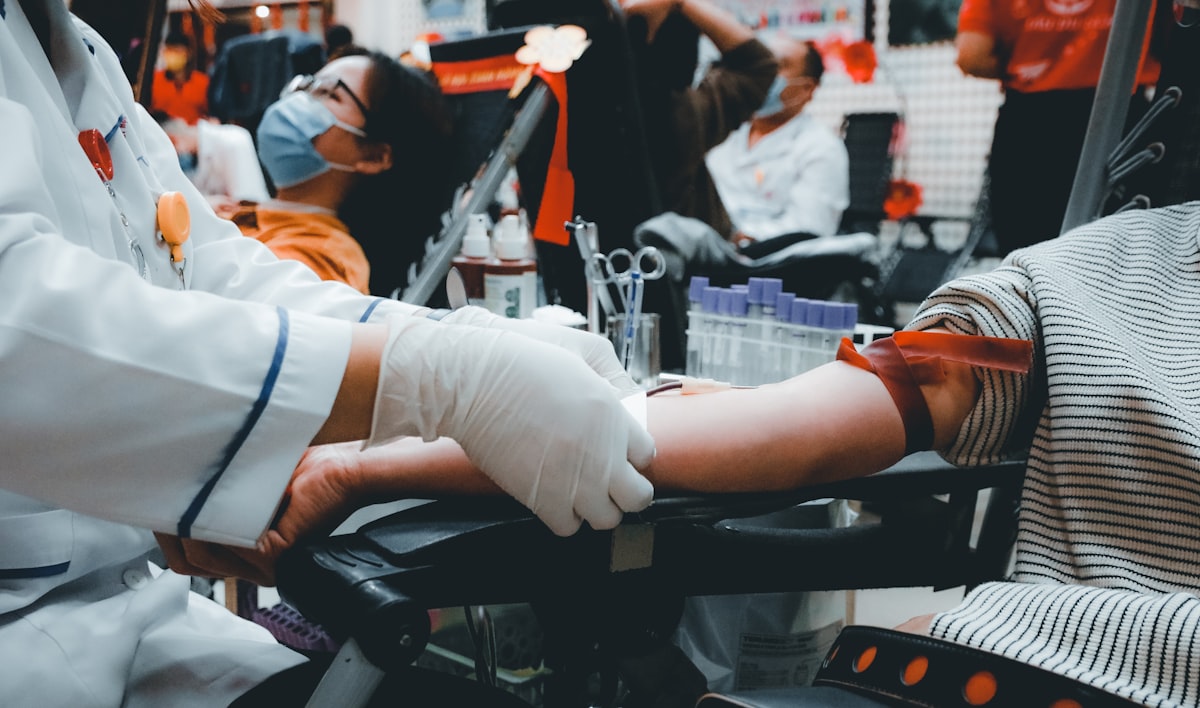
Plasma is the liquid portion of blood that carries cells, proteins, and clotting factors throughout the body. Plasma donations are essential for treating critical conditions like severe burns, hemophilia, and immune deficiencies.
How plasma donation differs
In plasma donation (apheresis), only the plasma is collected — your red cells and platelets are returned to you. This means:
- You can donate more frequently — every 28 days vs. every 90 days for whole blood
- The process takes longer — about 60-90 minutes
- A larger volume of plasma is collected per session
Who needs plasma
- Burn victims need plasma proteins to maintain blood pressure and fluid balance
- Hemophilia patients need clotting factors found in plasma
- Immune-deficient patients need antibodies to fight infections
- Trauma victims need rapid volume replacement
If you're a regular blood donor, consider trying plasma donation — your single visit can support multiple critically ill patients.